Clarence Valley Ramblers
History
A little of Grafton’s story, and the history of the Clarence Valley Ramblers’ Jacaranda Rally.
Grafton
Grafton has a very beautiful and very gracious city centre, characterised by wide streets, elegant Victorian buildings, a superb location on the banks of the Clarence River, a sense of solidity, and a long-standing concern with civic beauty.
In fact, the first ornamental trees were planted as early as 1874 and the city’s famous jacaranda stands in 1907–08.
Grafton is located about 40 km due west of the coast and 625 km north-east of Sydney at the junction of the Pacific and Gwydir Highways. The area was occupied by the Gumbaingirr Aborigines at the time of European colonisation.
It is thought that the first whites in the area were convict escapees from Moreton Bay who passed through the area in the late 1820s and early 1830s. One of their number, Richard Craig, reported a big river and a plenitude of valuable timber when he arrived at Port Macquarie in 1832. He was later employed by Thomas Small of Sydney who, inspired by Craig’s reports, sent off his brother and two dozen sawyers on board the schooner, the Susan, to the “Big River”.
It was the first European vessel to enter the river. Other cedar-cutters followed in their wake. Small took up a large parcel of land on Woodford Island, opening the way for other pastoralists along the river that Governor Gipps named the Clarence in 1839.
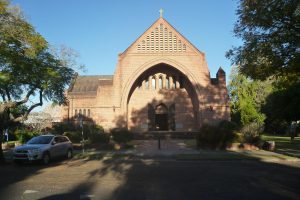
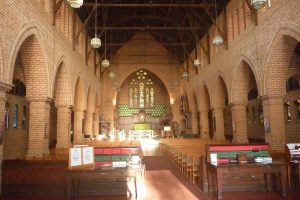
A township was laid out in 1849 and named after the Duke of Grafton who was the grandfather of Governor Fitzroy. The first land sale took place in the early 1850s, a school opened in 1852 and the first Anglican church in 1854. The population, by 1856, had grown to 1069.
Wharves were established in the 1850s and Grafton benefited both from its location on the main coastal road to the north and from gold discoveries on the upper Clarence River. It soon became the major town on the Clarence and was declared a municipality in 1859.
Grafton was declared a city in the mid-1880s, by which time its population had surpassed 4000. In 1897 South Grafton established itself as a separate municipality and the two settlements were not amalgamated until 1956. This separation must have been due, in part, to the absence of a bridge.
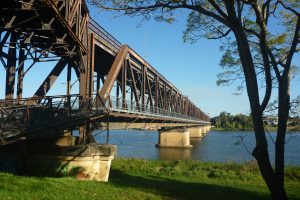
Remarkably, this situation was not rectified until 1932. It is even more remarkable when one considers that the rolling-stock of the Sydney–Brisbane railway, which reached South Grafton in 1915, had to be ferried across until that time. When the bridge arrived it was a unique two-storey construction, with the railway running underneath the road. It was also a lift bridge, although the decline of river trade saw the lift section sealed.
The Jacaranda Festival CVR Motorhome Rally
The CVR Jacaranda grew from humble beginnings, with mainly members enjoying their chapter outing to coincide with the main Jacaranda event. As others heard about the fun times, it grew to 15 vehicles plus.
Our President at the time, Ian Wright, asked Carol Randall to come on board and use her marketing skills to see if more CMCA members could be encouraged to attend and whether the event could grow into a week’s outing.
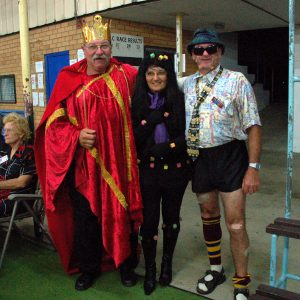
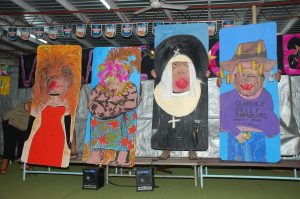
Having a program with something for every taste and aiming to get people involved was the key. The program developed to include a concert, bus trips, an easy dress-up theme, activities tied in with the Melbourne Cup and advertising for the event.
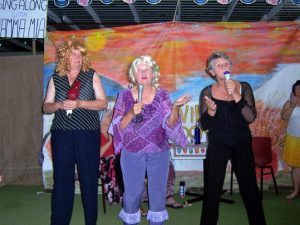
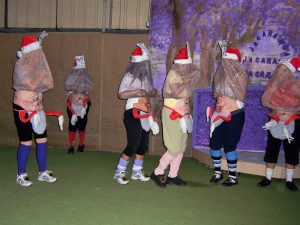
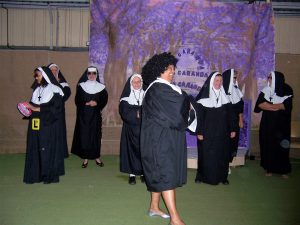
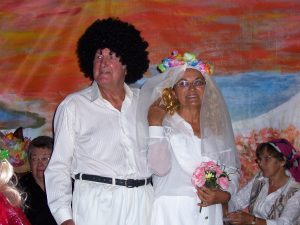
With much badgering and pleading with members, the first concert was held full of skits and entertainment. The theme was Hawaiian; there were horse races, a hat parade and fashions on the field. Bus trips to garden displays and a local tour of Grafton and its history were also on the agenda. The year was 2006.
Every year saw growth, with both new members and old members returning. The Jacaranda event became a much-talked-about event and grew to become a must-do on the CMCA members’ calendar.
Carol Randall N5638
CVR Secretary